Don't Hire a Modified Bitumen Contractor Without Asking This First
Upgrading a commercial property with a new flat roof is a major capital investment that demands strict attention to detail. At Cairns Roofing LTD, we have seen too many property owners pay the price for hiring inexperienced crews. Finding reliable modified bitumen contractors requires looking beyond the initial price tag and understanding the technical requirements of the job. A poorly executed installation will lead to persistent leaks, interior water damage, and premature structural failure.
The heat welding process used for these roofing systems requires specialized training and a deep understanding of building science. Many property managers assume all flat roofing is handled the same way, but torch-applied systems leave zero margin for error. Business owners in Caledon need to ask specific questions to verify the expertise of the people working on their property. Knowing exactly what to look for during the bidding process will save you from constant roof repairs down the road. We want to outline the essential checks every property owner should make before signing a contract.
Key Decision Points:
- Understanding the Heat Welding Process
- Red Flags When Evaluating Bids
- What is the most common failure point of a modified bitumen roof?
- Crucial Questions to Ask Before Signing
Understanding the Heat Welding Process
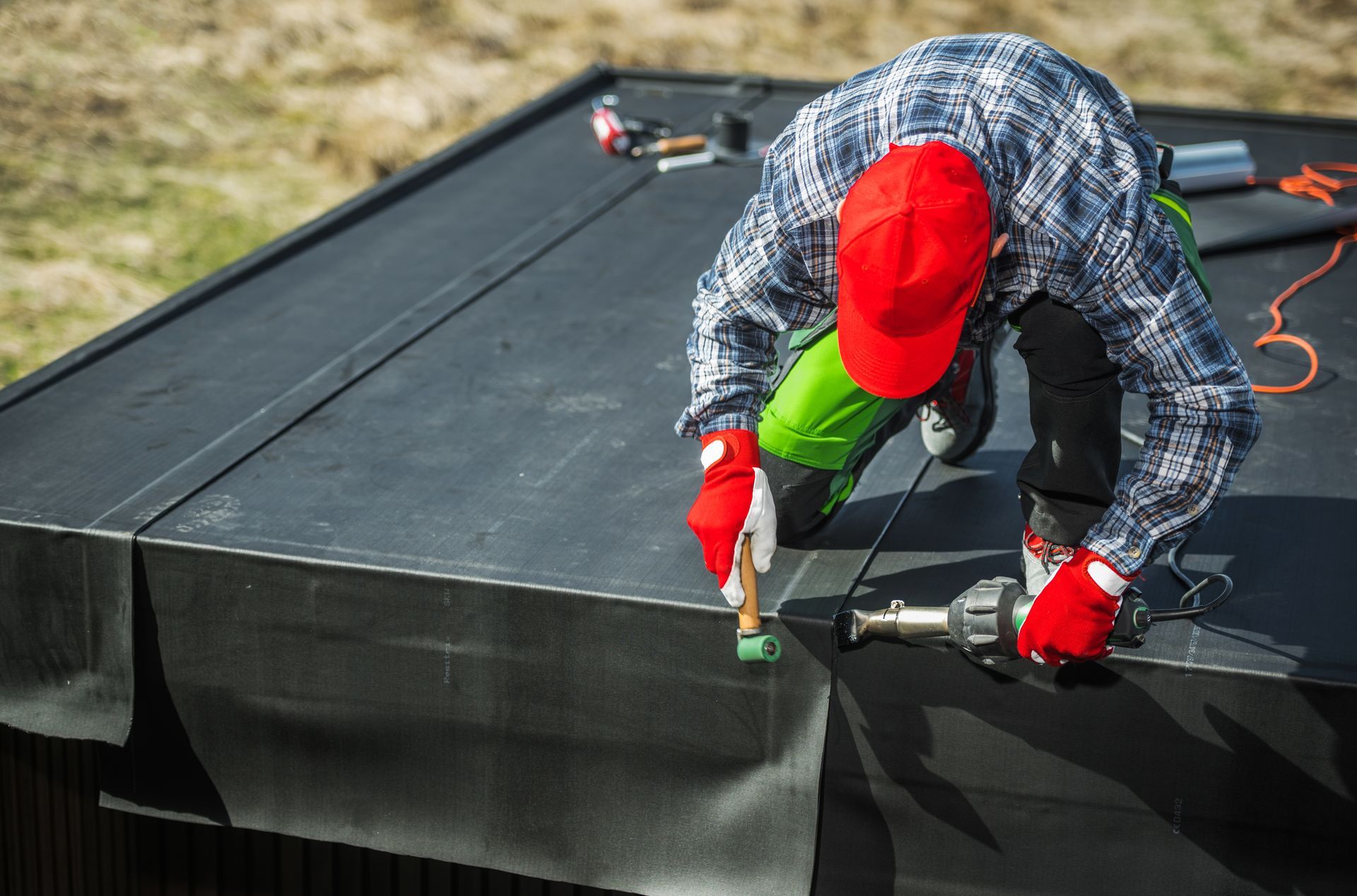
A modified bitumen roof relies on melting the asphalt backing of the membrane to create a watertight seal. This requires absolute precision with an open flame torch to ensure the material bonds correctly to the substrate and the overlapping sheets. If the technician moves too quickly, the seam will peel open; if they move too slowly, the material loses its structural integrity.
- Bleed out: A proper weld will show a consistent quarter inch of melted asphalt oozing from the seam along the entire edge.
- Temperature control: Applying too much heat burns the reinforcement mat, while too little heat prevents a waterproof bond.
- Substrate prep: The underlying layers must be completely dry and secure. Trapped moisture will instantly vaporize under the torch, causing steam blisters that destroy membrane adhesion.
Red Flags When Evaluating Bids
The commercial roofing industry has standard practices that protect both the contractor and the building owner. When evaluating proposals for roof replacement or maintenance, certain omissions clearly indicate a lack of professional experience or an intent to cut corners.
- Missing insurance details: Open flame applications carry inherent risks, and standard general liability insurance rarely covers hot work. Your contractor must carry specialized hot work coverage.
- Vague material lists: The bid should specify the exact brand, ply count, and surfacing material being used, rather than just stating "torch down roofing."
- Rushed timelines: Heat welding is a slow and methodical process that cannot be safely rushed to finish a day early without compromising seam quality.
What is the most common failure point of a modified bitumen roof?
The most frequent point of failure is at the lap seams and the flashing details around roof penetrations. If the installer does not achieve a solid bleed out during the torching process, water will easily find its way between the layers. Flashing around an HVAC unit is particularly vulnerable because the membrane must be cut, folded, and welded at sharp angles. If those intricate cuts are not sealed flawlessly, water bypasses the main field entirely. These cold joints are notorious for opening up during seasonal freeze and thaw cycles.
Crucial Questions to Ask Before Signing
Taking control of the hiring process means asking direct questions about safety and installation methods. A reputable contractor will be happy to explain their procedures and provide clear documentation. If a contractor acts defensive when you ask these questions, consider that a major warning sign.
- Fire watch protocol: Ask how long the crew remains on site after the torches are turned off to monitor for smoldering materials. Two hours is the industry standard.
- Deck inspection: Confirm whether they include a thorough inspection of the wood or metal deck once the old roof is removed to check for hidden rot.
- Warranty specifics: Request a clear explanation of what the workmanship warranty covers compared to the manufacturer material warranty.
Securing the Right Roofing Partner
Vetting your contractor thoroughly ensures your property receives a watertight system that performs exactly as intended. Knowing the right questions to ask puts you in control of your building maintenance and protects your bottom line. Call our team to discuss your next flat roof project and experience proper professional execution.
Share This Blog